Ghost Hands: The Slow Erasure of Comic Book Creators from Their Own Work
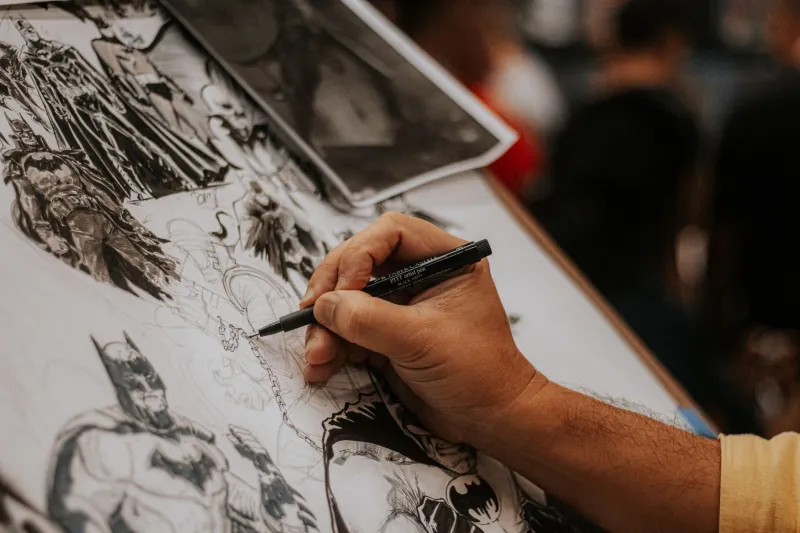
Flip open almost any comic from the Silver Age and you'll find a credits box. It might be tucked into a corner of the splash page, maybe squeezed under a title logo, but it's there—listing the writer, the penciler, the inker, sometimes even the editor by name. It was a small gesture, but it meant something. It said: real people made this.
Now crack open a random issue from the last five years and play a little game. Without checking the inside front cover—which itself might bury credits in six-point type between a subscription ad and legal boilerplate—try naming the colorist. The letterer. The cover inker who spent forty hours rendering that gorgeous variant you paid an extra four bucks for. Odds are, you can't. And increasingly, the industry seems perfectly fine with that.
The Credits Box Is Dying, and Nobody's Throwing It a Funeral
This isn't a small aesthetic complaint. The quiet disappearance of prominent creator credits from modern comics represents something genuinely troubling about how the medium values—or fails to value—the labor that defines it.
For decades, the credits page was a standard piece of comic book architecture. Writers got their names on covers. Artists got theirs. The whole collaborative chain was acknowledged, even celebrated. That tradition has eroded steadily, accelerated by digital production pipelines that treat individual contribution as interchangeable data rather than distinct craftsmanship.
Today, credits are often buried. Sometimes they appear only in the indicia—that dense legal paragraph most readers skip entirely. Digital editions on platforms like ComiXology have historically been even worse, stripping credits metadata or displaying it inconsistently depending on the platform's formatting. You can spend fifteen minutes trying to figure out who lettered a book you just read on your tablet and come up empty.
Who Actually Gets Hurt Here
Here's where the stakes get real. For established creators with two decades of name recognition, invisible credits are an annoyance. For someone trying to break into the industry, they're a career obstacle.
Lettering and coloring are the two disciplines hit hardest. Both are essential—genuinely transformative contributions to how a comic reads and feels—and both are chronically undervalued in terms of credit visibility. A colorist can take a mediocre pencil job and make it sing. A letterer shapes the entire reading rhythm of a story. Yet these creators frequently find their names absent from covers, promotional materials, and even some print editions.
Building a reputation in comics depends heavily on people being able to trace your work back to you. Editors hiring for new projects, fans looking for creators to follow, journalists writing profiles—all of that relies on credits being findable and prominent. When your name is buried or missing entirely, you become professionally invisible at the exact moment visibility matters most.
Emerging talent trying to put together a portfolio faces a specific frustration: they can point to work they did, but they can't always prove they did it in any way that's easily verifiable. That's not just inconvenient. It actively disadvantages people who are already working at the margins of an industry with notoriously tight entry points.
Corporate Consolidation and the Assembly Line Problem
The Big Two—Marvel and DC—operate at a scale that makes individual recognition structurally awkward. When a single title might rotate through three colorists in six issues due to scheduling crunches, or when a book ships with a different letterer than solicited because of production deadline chaos, the incentive to prominently feature creator names weakens. It draws attention to the churn.
Corporate comics increasingly function like assembly lines where the brand is the product and the creators are the mechanism. Nobody buys a Batman comic because of who lettered it. The argument—rarely stated out loud but clearly embedded in how these books are packaged—is that readers don't care enough to justify the real estate.
That reasoning is self-fulfilling. Readers don't look for credits partly because credits aren't easy to find. The medium trained its audience to think about writers and maybe pencilers, and then quietly stopped making it convenient to think about anyone else. The result is a readership that genuinely doesn't know what colorists do, because nothing in their reading experience has ever pointed them toward finding out.
The Indie Space Is Doing It Better (Mostly)
This is one area where smaller publishers and self-published creators have a real structural advantage. When you're a two- or three-person team putting out a book through your own imprint or via crowdfunding, credits aren't a corporate afterthought—they're a point of pride. Kickstarter comic campaigns almost universally lead with creator names, because the creator is the pitch.
Image Comics, Dark Horse, BOOM! Studios, and other mid-tier publishers tend to handle credits with more care than their larger competitors, in part because creator ownership agreements and reputational stakes make attribution more meaningful for everyone involved. It's not a perfect record, but the culture around credits in independent comics feels noticeably healthier.
Some creators have also started advocating loudly on social media, calling out missing credits when they spot them and publicly thanking collaborators by name in ways that force visibility even when print editions don't provide it. It's a workaround, not a solution—but it reflects a growing awareness that the problem is real.
What Actually Needs to Change
The fix isn't complicated in theory. Credits should be prominent, standardized, and complete—on covers where space allows, on splash pages where it doesn't, and in digital metadata that actually travels with the file. The Comics Magazine Association of America's old standards weren't perfect, but they at least established that crediting creators was a baseline expectation. Something equivalent for the current era would be a start.
Reader pressure matters too. Fans who care about craft can make a habit of seeking out and sharing creator credits—tagging colorists when you post about a book's gorgeous palette, mentioning the letterer when a book's dialogue flow particularly clicks. That kind of visibility, built organically through fan culture, creates the demand signal that publishers respond to.
Beyond that, it's worth asking what kind of medium comics wants to be. The art form has spent years arguing—correctly—that it deserves the same serious critical attention as film or literature. But film credits everyone. Even the caterer gets a scroll. Comics, at its worst, can't be bothered to put the colorist's name somewhere a reader might actually see it.
That gap between the medium's self-image and its actual practices is worth closing. The hands that make these books deserve to be seen.