You Can't Go Home Again: Why Rebooting Classic Comic Series Almost Always Backfires
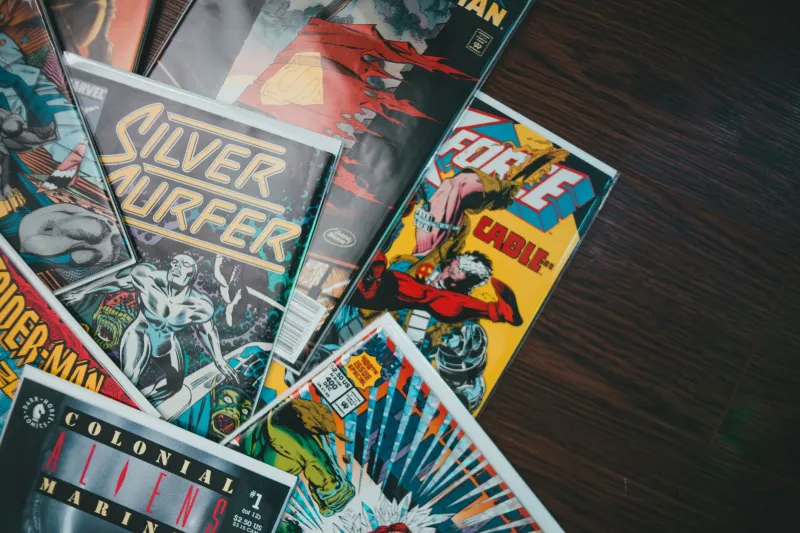
There's a particular kind of disappointment that comic fans know well. It arrives when a series you genuinely loved gets announced for a revival — the creative team sounds promising, the publisher is talking about honoring the legacy, and the preview art looks great. Then the book actually comes out, and something is just... off. The characters look right but feel wrong. The dialogue sounds like someone doing an impression of the original. The story hits familiar beats but lands none of them.
This isn't a new problem. Publishers have been mining nostalgia for as long as there's been a direct market to exploit it. But the pace has accelerated, and the gap between fan expectation and delivered product seems to be widening. Understanding why requires an honest look at what these revivals are actually trying to accomplish — and why that goal is often fundamentally incompatible with what made the originals special.
The Original Context Is Gone Forever
Here's the thing that revival announcements never quite acknowledge: classic comics didn't become beloved in a vacuum. They were products of specific cultural moments, specific creative relationships, and specific reader communities that no longer exist in the same form.
Take something like the original Swamp Thing run. Alan Moore's celebrated 1980s run didn't just tell good stories — it arrived at a moment when the Comics Code was beginning to crack, when readers were hungry for something that treated them as adults, and when the direct market was creating space for experimentation that newsstand distribution never allowed. You cannot recreate those conditions. A new creative team can write a technically excellent Swamp Thing story in 2024 and it will still exist in a completely different cultural context, read by a completely different audience, with completely different expectations.
This is the foundational problem that most revival discussions skip over entirely. Nostalgia is emotional. It's tied to who you were when you first read something, how old you were, what was happening in your life, who you shared the experience with. A reboot can recreate the aesthetics of a beloved series but it cannot recreate the feeling of reading it for the first time.
The Difference Between Homage and Imitation
Not every revival fails, and the ones that succeed tend to share a common characteristic: they're genuinely interested in the characters rather than in recreating a specific era's tone.
Tom King's work on Vision is a useful example. It didn't try to recapture the feel of any particular classic Vision story. It took the character seriously as a figure with unexplored psychological depth and built something new from that foundation. Readers who loved the original West Coast Avengers appearances of the character weren't alienated by it — they were given a reason to care about Vision in a fresh way. That's what a successful revival actually looks like.
Compare that to the pattern of revivals that essentially function as cover bands. The creative team studies the original run, identifies the surface-level elements that fans remember fondly — the visual style, the supporting cast, certain catchphrases or recurring plot structures — and reassembles them. The result feels like a tribute act rather than a living, breathing continuation. Fans can tell the difference immediately, even if they can't always articulate why.
The distinction matters because it comes down to creative intention. Is the team making this book because they have something to say with these characters? Or are they making it because the IP exists and there's a market for it?
When Marketing Drives the Bus
Let's be direct about the economics here, because they're central to why so many revivals miss. The decision to revive a classic series almost never starts with a writer pitching a story. It starts with a licensing conversation, a marketing strategy, or an anniversary milestone. The creative team is often assembled after the business decision has already been made.
This creates a fundamental problem. The original Teenage Mutant Ninja Turtles, to pick one example, emerged from Kevin Eastman and Peter Laird genuinely wanting to make something weird and fun with no particular commercial expectation. The current franchise ecosystem surrounding those characters is a billion-dollar IP management operation. You can still make good Turtles stories within that system — the 2012 Nickelodeon animated series is evidence of that — but the conditions under which the original was created are so thoroughly gone that any direct comparison is almost meaningless.
Fans often identify this mismatch as a lack of "heart" in revival projects, and that's actually a pretty accurate diagnosis. When a creative team is working within tight IP guidelines, with an eye on multimedia synergy and a mandate to appeal to both longtime fans and new readers simultaneously, the resulting work tends to be careful in a way that kills spontaneity. The original Watchmen was not careful. Neither was the original Sandman run, or the first Hellboy stories, or the early Spawn issues. Those books had the slightly reckless energy of creators doing exactly what they wanted without a committee looking over their shoulder.
The Fan Expectation Trap
Creative teams on revival projects face an impossible audience problem. Longtime fans want the feeling of the original without it being a direct copy. New readers need enough context to get invested without being buried in forty years of continuity. Publishers want both audiences simultaneously.
This often results in a kind of creative paralysis where the book ends up being too familiar to feel fresh and too different to satisfy purists. The creative team is essentially trying to thread a needle that may not actually exist.
The revivals that escape this trap tend to do so by committing fully in one direction. Either they embrace the continuity and write explicitly for the longtime fan — accepting that casual readers might not follow — or they treat the source material as pure inspiration and build something that can stand completely on its own. The middle path, which most revival projects attempt, is where things go wrong.
What Actually Works
For all the failures, there are genuine success stories worth learning from. Saga of the Swamp Thing itself was technically a revival of an older character. Daredevil has been successfully reinvented multiple times across different eras. Hawkeye under Matt Fraction and David Aja took a character with decades of complicated history and made him feel completely contemporary without erasing anything.
The common thread is creative teams with genuine autonomy and a clear point of view. Not teams tasked with recreating a classic run, but teams given permission to do something new with familiar materials.
That's a harder sell from a marketing standpoint. "New creative vision" doesn't move units the way "returning to the classic era" does. But the evidence is pretty consistent: the revivals built on nostalgia alone tend to fade quickly, while the ones built on genuine creative investment stick around and eventually become classics in their own right.
The lesson isn't that publishers should stop revisiting beloved properties. It's that the question driving those revivals needs to change. Not "how do we recreate what fans loved?" but "what do we have to say with these characters that hasn't been said before?" That's a harder question to answer. It's also the only one worth asking.