Same Song, Different Costume: How Big Comics Got Stuck Telling the Same Story Over and Over
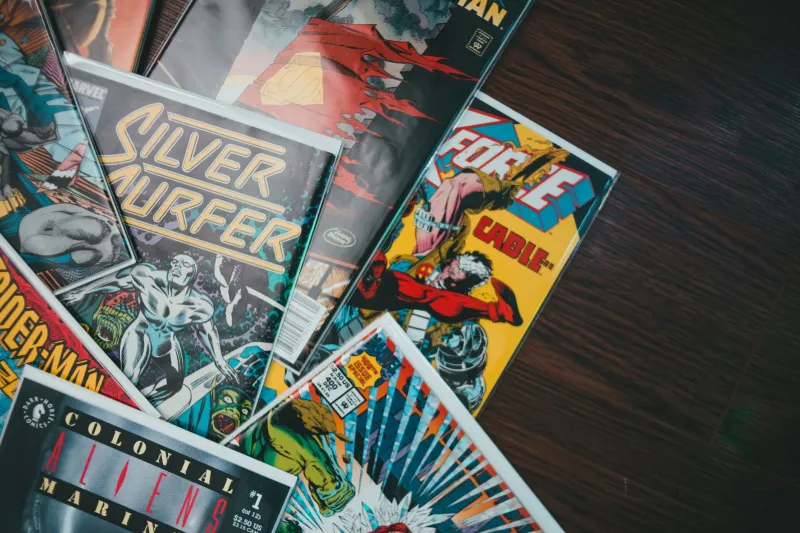
There's a moment every longtime comic reader knows. You're a few issues into a new arc, something feels vaguely familiar, and then it hits you — you've read this story before. Not a remix, not a loving homage. The same story, wearing a different character's face.
It happens so often now that some fans have started treating it like a drinking game. Hero gets too powerful, becomes a threat, allies turn on them, redemption follows. Or: beloved character dies in a shocking issue, fans mourn, sales spike, character returns six to eighteen months later with a new costume and a vague explanation involving cosmic energy or a Lazarus Pit variant. Rinse. Repeat.
The question worth asking in 2025 isn't just why this keeps happening. It's whether the Big Two have actually lost the ability — or the will — to break the cycle.
The Pattern Has a Name (Several, Actually)
Comic scholars and obsessive readers have catalogued these loops for years. There's the "Dark Mirror" arc, where a hero's greatest strength becomes their undoing and someone close to them has to pull them back. There's the "Legacy Burden" story, where a new character inherits a mantle and spends two years proving they deserve it before the original returns. And then there's the granddaddy of them all: the universe-ending crossover event that reshapes continuity, only for things to quietly drift back to the status quo within a year.
Think about how many times Marvel has told a version of the "corrupted hero" story. Jean Grey and the Phoenix Force. Tony Stark and extremism. Wanda Maximoff and reality itself. Thor and worthiness. Each of these is a genuinely compelling character concept — the first time. By the fourth or fifth iteration, with different names plugged into the same dramatic beats, it starts feeling less like storytelling and more like content production.
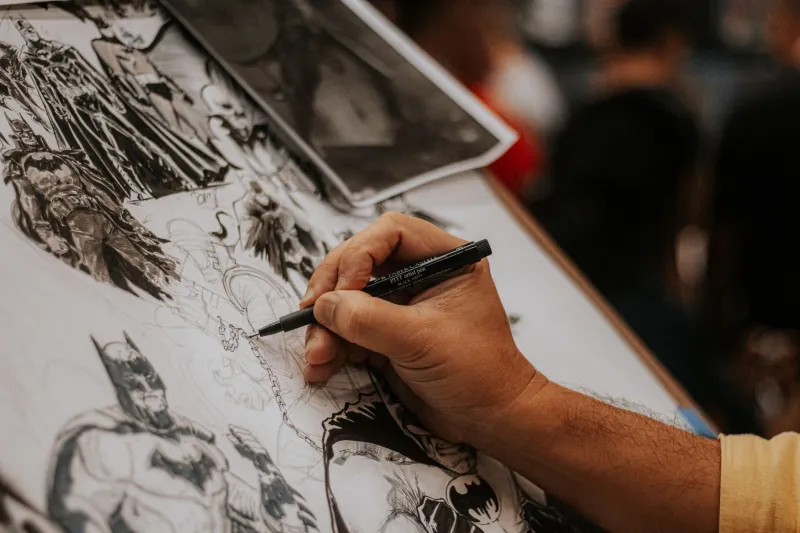
DC isn't innocent here either. How many times has Batman been broken, physically or psychologically, only to claw back to the top? How many Joker arcs hinge on the same philosophical debate about chaos versus order? How many times has Superman been stripped of his powers, forced to be "just a man," before rediscovering what makes him super? These aren't bad stories in isolation. Strung together across decades, they start to feel like a loop that nobody knows how to exit.
Risk Aversion Is a Business Decision
Here's the uncomfortable truth: recycled storylines aren't a creative failure so much as a financial strategy. The economics of Big Two publishing reward familiarity. Longtime readers buy books featuring characters they already love in situations that feel emotionally resonant — which often means situations they've already responded to before. New readers, when they show up at all, tend to gravitate toward accessible entry points, which frequently means classic story structures.
When a publisher greenlit a bold, genuinely original concept in the last decade, the sales numbers didn't always justify the risk. Meanwhile, a new "Death of [Insert Hero]" arc reliably moves units and generates headlines. It's not hard to see why editorial departments keep going back to the well.
There's also the Hollywood pipeline to consider. With every major superhero property feeding into film and television adaptations, publishers have a vested interest in keeping their characters in recognizable configurations. A Spider-Man who's radically different from his MCU counterpart is a licensing headache. Narrative innovation, in this context, becomes a liability.
But Fans Are Complicit Too
It would be easy — and a little too convenient — to lay all of this at the feet of corporate editorial decisions. The reality is messier. A significant portion of the comic-reading audience wants the familiar. Not because they lack taste, but because comfort and ritual are part of why people collect.
Fan communities erupt in genuine excitement when a classic storyline gets revisited or reimagined. "Dark Phoenix Saga" callbacks still generate buzz. Every time someone hints at an "Infinity Gauntlet"-style event, forums light up. The nostalgia economy in comics is enormous, and it runs on the same recycled fuel that frustrates more adventurous readers.
This creates a split audience that publishers are constantly trying to satisfy simultaneously — and mostly failing both. Longtime readers feel patronized by retreads; newer readers feel lost by continuity-heavy callbacks to stories they've never read. It's a narrative tightrope that snaps under the weight of competing demands.
Where Indie Comics Are Filling the Gap
This is where the conversation gets genuinely interesting, and where smaller publishers deserve a lot more credit than they typically receive. The most formally adventurous, structurally original comics of the last fifteen years have almost exclusively come from outside the Big Two ecosystem.
Books from Image, Fantagraphics, Drawn & Quarterly, and BOOM! Studios have consistently pushed the medium into territory that Marvel and DC seem unwilling to explore. Series built around non-linear timelines, unreliable narrators, genre hybrids, and endings that actually stick — these have become the creative lifeblood of the medium precisely because they aren't beholden to the same commercial pressures.
When a creator-owned book kills a character, they stay dead. When an arc ends, it ends. The narrative stakes feel real in a way that's increasingly hard to manufacture at the Big Two, where everyone knows that death is a revolving door and the status quo is a gravity well everything eventually falls back into.
Is There a Way Out?
Some creators have found clever workarounds within the system. The best runs on flagship titles in recent memory tend to be the ones where a writer commits hard to a contained story with a defined endpoint — treating a superhero book more like a novelist would treat a standalone than like a serialized content machine. Those runs get remembered. They get collected. They get taught in comics studies courses.
But they're also the exception. And they rarely change the structural incentives that push the industry back toward repetition the moment that creative team moves on.
The honest answer is that there probably isn't a clean exit from the loop — not at the scale the Big Two operate. The real question for readers is whether that loop still has enough variation within it to stay worth riding, or whether the most exciting storytelling has already migrated somewhere else entirely.
Given what's happening in the indie space right now, that second possibility is starting to look less like a threat and more like a fact.