Stuck in the Longbox: Why Comics Can't Quit the 80s and 90s
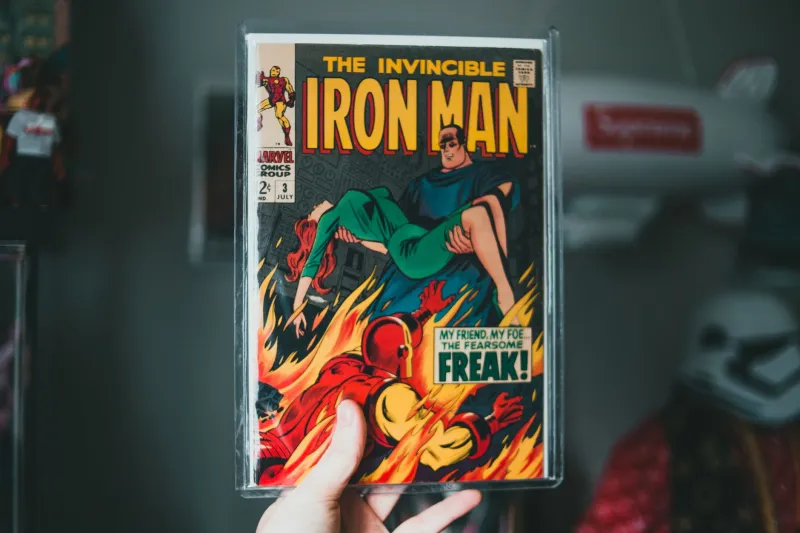
There's a running joke among longtime readers that Marvel and DC operate on a roughly 30-year lag — whatever blew your mind as a kid will eventually get rebooted, relaunched, or adapted into something with a streaming logo slapped on the poster. And honestly? The joke isn't that far off. Between Amazon's Invincible, Netflix's various superhero experiments, and the endless cycle of "definitive" comic relaunches, we're living inside a nostalgia machine that doesn't seem to have an off switch.
The question worth asking — especially for fans who actually care about where the medium is headed — isn't just why this keeps happening. It's whether this creative loop is genuinely serving readers, or whether it's mostly serving quarterly earnings reports.
The Economics of the Familiar
Let's be real: rebooting a beloved property is a calculated bet, not a creative decision. When a publisher greenlit a new X-Men run built around Jim Lee's early-90s aesthetic, or when a streaming platform announced yet another animated adaptation of a Frank Miller classic, those choices weren't made in a writer's room. They were made in a boardroom.
Recognizable IP reduces financial risk. A title with 40 years of brand equity comes pre-loaded with an audience, ready-made marketing hooks, and a licensing trail that can stretch from action figures to theme park rides. For publicly traded companies or platforms chasing subscriber numbers, that math is hard to argue with.
But here's the catch: the readers who grew up with those properties aren't the only people buying comics or subscribing to streaming services anymore. A 17-year-old discovering comics through social media doesn't have the same emotional attachment to a 1986 crossover event that a 45-year-old does. When publishers pitch nostalgia to that teenager, they're essentially asking them to borrow someone else's memories.
What Gets Crowded Out
Every shelf slot occupied by a nostalgia-driven relaunch is a slot that isn't going to a genuinely new concept. That's not hyperbole — it's just how distribution and retail attention work, especially in the direct market where comic shops have limited real estate and limited buy-in budgets.
The indie comics space has been screaming this from the rooftops for years. Creators building original worlds — the kind of stories that don't have a pre-existing fanbase to lean on — face an uphill battle for visibility precisely because the major publishers are so aggressively filling the oxygen in the room with legacy content.
And it's not just shelf space. It's critical attention, convention panel slots, and the kind of casual word-of-mouth that drives new readers to a title. When every major comics conversation is about whether the new Spider-Man run honors or betrays what came before, there's less bandwidth left to talk about the genuinely weird, exciting original series that launched last month from a creator nobody's heard of yet.
Nostalgia Done Right vs. Nostalgia Done Lazy
To be fair, not all legacy content is created equal. There's a meaningful difference between a creative team that uses an established character as a jumping-off point to say something genuinely new — think of the best runs on characters like Ms. Marvel or Hawkeye in the early 2010s — and a relaunch that exists purely to recreate the visual and narrative grammar of a specific era without adding anything to it.
The former uses familiarity as a door. The latter uses it as a ceiling.
The problem is that the industry increasingly defaults to the ceiling. When a streaming adaptation is announced and the primary selling point is how closely it hews to the source material from 1992, that's not a creative vision. That's a cover version of a cover version.
Readers can feel the difference, even if they can't always articulate it. There's a hollowness to content that exists only to trigger recognition rather than generate genuine feeling.
What It Would Actually Take to Change
Shifting this pattern isn't impossible, but it would require publishers and platforms to make decisions that run against their short-term financial instincts. That means taking real risks on original IP — not just a single experimental title buried in a month's solicitations, but a genuine commitment to developing new characters and worlds with the same marketing muscle and creative patience applied to legacy properties.
It also means rethinking how success is measured. A new series doesn't need to sell like a Batman title in its first month to be worth continuing. But the current industry structure — with its brutal cancellation timelines and direct market pressures — doesn't leave much room for slow-burn growth.
The indie comics world has figured some of this out, partly because it had no choice. Creators self-publishing through platforms like Kickstarter or building audiences through Webtoon and Tapas have proven that readers will show up for original stories if they can actually find them. The question is whether the major players are paying attention.
The Reader's Role
Here's the uncomfortable part: fans are part of this equation too. Every time a nostalgia reboot outperforms an original title, it sends a signal. Every think-piece celebrating how faithfully an adaptation recreates the look of a 1989 annual reinforces the idea that accuracy to the past is the highest creative virtue.
That doesn't mean readers need to stop enjoying classic properties — there's nothing wrong with loving what you love. But if you also want to see genuinely new stories get a real shot, the most powerful thing you can do is put your money and your attention there. Buy the original series. Talk about it online. Bring it up at your local shop.
The nostalgia cycle isn't going to break itself. But it can be pushed.
The longbox full of 80s and 90s back issues isn't going anywhere — and honestly, a lot of that stuff holds up. The real question is whether we're willing to make room next to it for something that doesn't exist yet.