The Short Stack: Why Every Comic Should Carry a Second Story

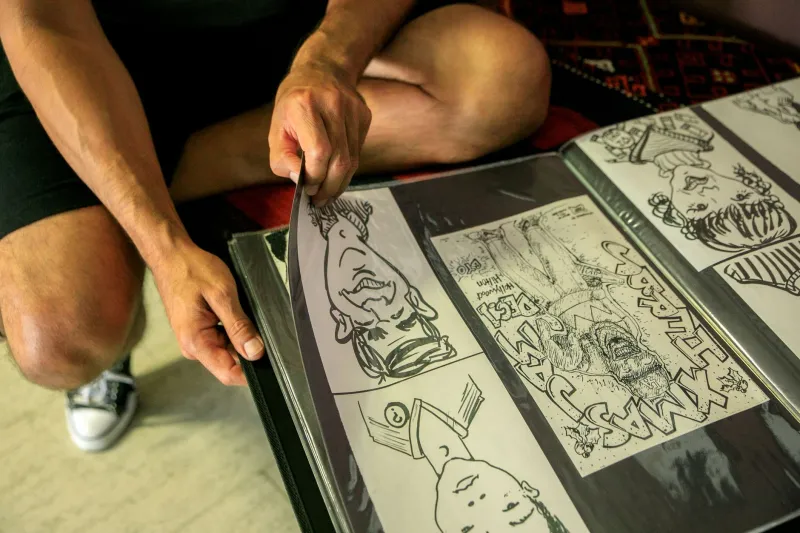
Photo: vintage comic book open to short backup story pages, newsprint, close up hands, via i.pinimg.com
Flip open a comic from 1975 and there is a decent chance the main character's story runs out around page eighteen. What follows is the good part: a six-pager about a side character, a horror vignette with no continuity whatsoever, a tryout strip by somebody who would be drawing covers five years later. The backup story was never the reason you bought the book. It was the reason the book felt generous.
Ask a collector today to name the last backup they read and you will usually get a shrug. Most backups stopped being stories a long time ago. The back pages now hold essays, sketch galleries, process notes, and letters columns, all of which are lovely and none of which are comics. That trade is a real loss, and it is one of the more fixable problems in the direct market.
The Original Bonus Feature
The backup is a pure artifact of the newsstand era. When page counts were fat and publishers split a title between two features, the short story was not a bonus, it was furniture. Detective Comics carried backups that kept whole corners of Gotham alive. Action Comics did the same for the Superman family. Adventure Comics and The Flash used the back half to hand characters their own spotlight. Mystery and war anthologies ran whole careers out of eight-page slots.
Somewhere between the page-count cuts of the 1980s and the advertising math of the 1990s, the slot shrank and then disappeared. A few revivals have popped up since, usually as anniversary treats or digital extras, but the standing, reliable backup has never come back to stay.
What a Backup Does for a Five Dollar Book
Here is the honest math on a modern single issue. It costs four or five dollars, it takes eight to twelve minutes to read, and it is competing with a streaming subscription that costs about the same per month. Readers already talk about waiting for the trade. The single issue needs to feel like something other than a rental fee for a chapter.
A backup solves that cheaply. It gives the reader a second, complete experience in the same purchase. It gives the issue a shape and a rhythm instead of ending mid-scene and asking you to come back in thirty days. It also gives the publisher a place to put material that will never support its own title: a villain's origin, a far-future flash-forward, a two-hander between side characters, a slice-of-life epilogue that would kill the pace of the main story.
And there is the discovery factor. Nobody buys a comic for a character they have never heard of. Everybody will read six pages about them if those pages happen to sit at the back of a book they already own. That is the entire mechanism by which a back catalog gets built, and it is currently switched off.
A Farm Team for New Talent
Talk to working professionals long enough and you will hear some version of the same story: the first paid work came from a short. Anthologies used to be where you got spotted. Most of those anthologies are gone now, or they pay in copies and gratitude.
The backup story is the lowest-risk version of that pipeline. Four to eight pages is a real page rate, a real credit, and a real deadline, but it is not a full series commitment. It lets an editor test a new penciller without betting a launch on them. It lets a colorist or a letterer develop a working relationship with a creative team. It is how you find out whether somebody can hold a page before you hand them twenty-two of them a month.
That matters more than fans usually admit. The talent pipeline is the one thing in this industry that cannot be fixed with better marketing.
The Practical Objections
Three complaints come up every time someone proposes this.
The first is page count. Printing runs in fixed signatures, so adding pages is not as simple as paying for a few more sheets. But a four-page backup often fits more comfortably into a book's existing signature than fans assume, and the story does not have to run every issue to be worth doing. Quarterly backups still break up the monotony.
The second is that readers skip them. Some will. But the readers who skip a six-page story are not the readers you have to win. The ones who read everything are the ones who will tell a friend, and those six pages are what they will describe.
The third is that it costs money for no extra sales. That is the real one, and it deserves a real answer: a backup is not a new expense, it is a substitution. Trade out a couple of variant covers for a couple of extra story pages and see which one annoys readers less.
What It Would Take
Bringing the backup back does not require a movement. It requires editors treating short comics as a normal part of the package again rather than a special event. Put them at the back with a clean title card. Keep them done-in-one so nobody has to keep a spreadsheet. Rotate the characters. Let the regular writer skip one, and let somebody new take the six pages. If a series has a month with a fill-in penciller, use the slot for something tied to the world instead of another retelling of an origin.
The single issue has been asked to justify itself for years now. The best answer anyone ever had was sitting right there the whole time, in the back of a 1975 comic, six pages long, drawn by somebody who was about to become famous.
If the cover is the reason you pick up a comic, the backup is the reason you remember it.