Before the Comments Section, We Had Letter Columns — And Honestly, We Were Better Off

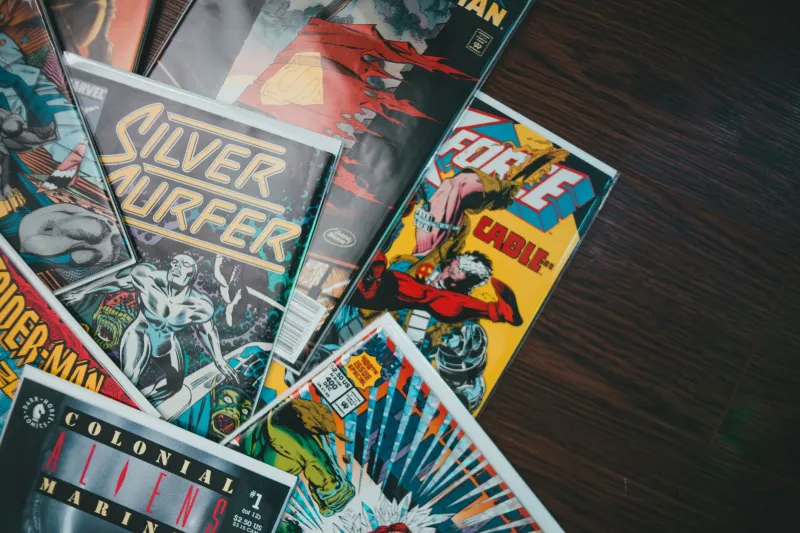
Photo: vintage comic book open to letters page close up, via www.babeyond.com
Somewhere in a longbox in my closet, there's an issue of Fantastic Four from the early '90s with a letter column that changed how I thought about comics. Not the story — the letters page. A kid from Ohio had written in to argue, at length, that a recent plot twist had betrayed the character. And Stan Lee's office (or whoever was minding the store by then) had printed it, along with a reply that took the criticism seriously. No dunking. No ratio. Just a conversation, preserved in ink, between a reader and the people making the thing.
We lost something when we lost that. I don't think it's nostalgia to say so.
What the Letter Column Actually Was
If you came up after the internet, here's the mechanics: comics ran a page at the back where readers' letters got printed alongside replies from the writer, editor, or assistant. Getting in wasn't guaranteed — space was finite, and someone had to choose your letter. You mailed it. Weeks later, maybe, you saw your own words, your name, your town, sitting next to a response from the person who wrote the issue.
That delay did something strange and wonderful. It forced thought. You couldn't fire off a hot take in eleven seconds; you had to write it, stamp it, and live with it. The letters that made it to print tended to be the considered ones — funny, angry, heartfelt, occasionally unhinged, but almost always written, in the old sense of the word.
And the replies weren't PR. Writers used those columns to tease upcoming arcs, settle arguments, admit mistakes, and occasionally argue back. There are famous letter-column exchanges — the Cerebus letters pages, Gaiman's Sandman columns, the great Marvel bullpen banter — that are genuine primary documents of the medium's history.
What We Got Instead
Now, the conversation is everywhere and worth less than ever. Reddit threads and X replies have infinite scale and zero curation. Every reaction is printed; nothing is chosen. The creator can see your take, technically, but they see ten thousand takes, all flattened to the same size. A thoughtful two-thousand-word argument about a plot twist and a screenshot with a joke carry identical weight in the feed.
The letter column had a filter, and the filter was editorial judgment — a human being deciding which reader voices deserved to be part of the record. That's a form of respect social media has never managed: the assumption that some fan commentary is worth preserving, and some isn't.
There's also the archive problem. A letter column from 1989 is still there, in the issue, for every future reader. Today's discourse evaporates. The thread scrolls away. Twenty years from now, a historian of this era of fandom will find almost nothing, because almost nothing was designed to last.
Could Publishers Bring It Back?
I think so — and some are trying. Webtoon comments and Substack replies gesture at it, but they inherit the feed's problems: volume, velocity, no curation. What would the real revival look like?
A curated page, digital or print, in every collected edition. Reader letters selected by the creative team, with real replies. A slower cadence — monthly, not instant. Names and cities printed. And crucially, a reason to write well: limited space means your letter competes with other letters, not with an algorithm's engagement metrics.
Some indie publishers already do versions of this, and their letter pages are often the best part of the trade. It costs almost nothing. It builds exactly the kind of reader loyalty that the industry keeps trying to manufacture through variant covers and FOMO.
The Point Isn't the Past
This isn't about wanting the old world back. It's about noticing that the old world accidentally solved a problem we still have: how to let readers talk back to creators in a way that builds community instead of exhausting everyone involved.
The letter column was slow, curated, archived, and personal. The comment section is fast, infinite, ephemeral, and anonymous. Only one of those ever made a kid from Ohio feel like a part of comics.
Bring the page back. I'll write in.