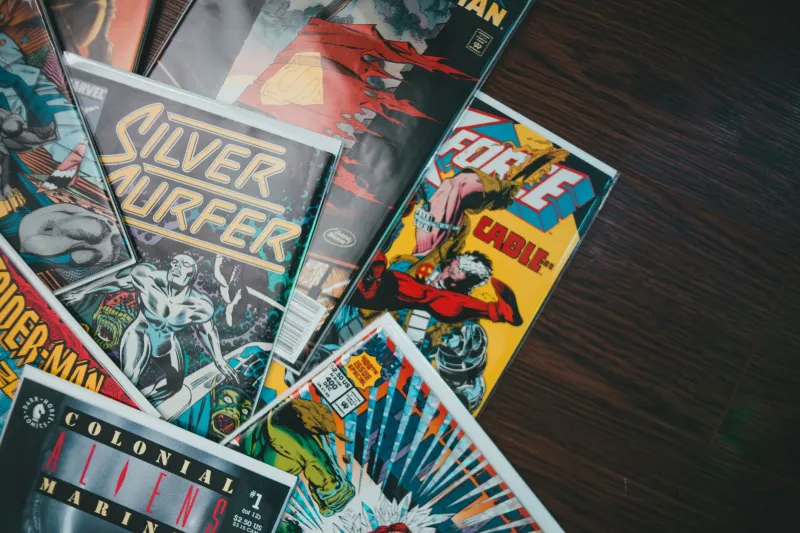
Sold Out and Gone: The Quiet Crisis of Comics That Vanish Before You Can Buy Them
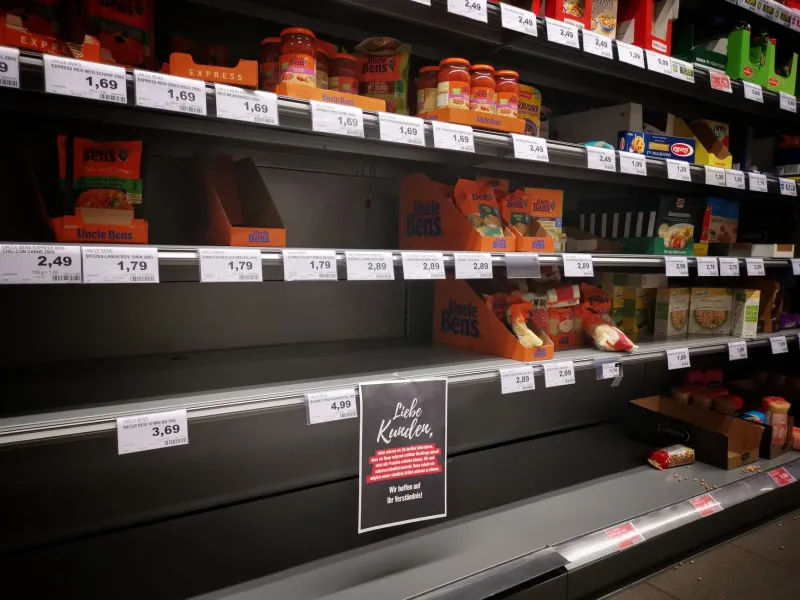
Somebody recommends a comic to you. Maybe it's a friend, maybe it's a Reddit thread, maybe it's a YouTube reviewer who made the book sound absolutely unmissable. You get excited. You head to your local comic shop, or you fire up an online retailer, and you search for issue #1. Gone. Out of print. Available used on eBay for $40 because some speculator bought six copies the week it launched. You check the publisher's site. No reprint announced. Digital? Maybe, if you're lucky. But that first-issue buzz? Dead on arrival for you.
This scenario plays out thousands of times every week across the United States, and it's doing quiet, serious damage to an industry that desperately needs new readers.
How the Ordering System Sets Books Up to Fail
To understand why this keeps happening, you have to understand how comics actually get ordered. The dominant distribution model in the US relies on what's called a direct market — retailers order comics months in advance through solicitations, before the books even exist. They're making educated guesses about demand based on a publisher's description, a creative team's reputation, and whatever marketing buzz has been generated.
Here's the problem: most retailers order conservatively. They've been burned before by overordering books that didn't sell, and in a business with tight margins, dead stock is a real financial risk. So they order cautiously, especially on new titles or series from smaller publishers without a proven track record. When a book unexpectedly takes off — driven by word of mouth, a viral review, or a creator suddenly hitting a cultural moment — there often aren't enough copies to meet demand. And reordering? That's where things get genuinely broken.
Reorder windows are narrow, print runs are often fixed at the initial quantity, and publishers aren't always set up to rush a second printing quickly enough to catch the momentum wave. By the time a reprint arrives, the conversation has moved on.
The Scarcity That Doesn't Have to Exist
What makes this particularly frustrating is that it's not an inevitable feature of the medium — it's a structural choice. Book publishers manage print-on-demand and rapid reprint cycles with far more flexibility. Major novel publishers can have a book back in stock within days of selling out. The comic industry, for a variety of historical and logistical reasons, hasn't built that same infrastructure at scale.
Some publishers have made progress. Image Comics has generally been better than most at getting second and third printings into the market quickly for breakout hits. But even Image isn't immune to the gap between a book going viral and copies actually reaching shelves. For smaller indie publishers, the gap can be months — or the reprint never comes at all.
Digital availability helps, but it's not a complete solution. A meaningful portion of comic readers still prefer physical issues, either for the experience, for collecting purposes, or simply because they don't want to manage yet another digital subscription. Telling those readers to "just read it digitally" is a bit like telling someone who wanted to see a movie in theaters that they can stream it in six months. Technically true. Practically unsatisfying.
What Scarcity Does to Readership
The ripple effects of this scarcity problem extend well beyond the individual frustrated reader. Think about what happens when someone can't get issue #1 of a series they're interested in. Most of them don't wait patiently for a reprint. They move on. The moment passes. And that's a reader the industry failed to convert.
Now multiply that by the number of people who heard about Radiant Black, or Ordinary Gods, or any of a dozen breakout indie titles in recent years, tried to find the early issues, and couldn't. Some of those people eventually found trade paperback collections and caught up. But a lot of them just drifted away. Comic fandom is full of people who say "I tried to get into it but couldn't find the issues" — and that's a systemic failure, not a personal one.
There's also a speculator market problem layered on top of this. When a book sells out, prices on the secondary market can spike almost immediately. That's great for people who bought early, but it actively punishes readers who are just trying to follow a story they love. Nothing kills enthusiasm for a series faster than discovering you need to spend $25 on a back issue just to read chapter one.
The Digital Age Comparison That Should Sting
Here's the uncomfortable comparison the comic industry needs to sit with: in virtually every other entertainment medium, scarcity of this kind has been eliminated. Want to watch a show everyone's talking about? It's on the streaming service right now, available to millions simultaneously. Want to read a book your friend recommended? Download it in thirty seconds. Want to listen to an album? It's on every platform, instantly, forever.
Comics are competing for reader attention in a world where instant availability is the baseline expectation. Every time a reader can't find a physical copy of a hot new series, and the digital version is either unavailable or locked behind a platform they don't use, the industry loses a little more ground.
What Needs to Change
The fix isn't simple, but the direction is clear. Publishers need to build better demand-forecasting tools, invest in faster reprint infrastructure, and make digital availability a genuine priority rather than an afterthought. Retailers need better data-sharing with publishers so sudden demand spikes can be identified and responded to quickly.
Some publishers are experimenting with direct-to-reader subscription models that bypass the traditional ordering system entirely. Others are leaning into print-on-demand for back issues. These are good instincts, even if the execution is still rough around the edges.
But the most important shift is cultural: the industry needs to stop treating scarcity as a feature and start treating availability as a fundamental responsibility to its readers. Great comics deserve to be found. Right now, too many of them aren't.