Waiting for the Trade: How the Album Mentality Is Quietly Killing Monthly Comics

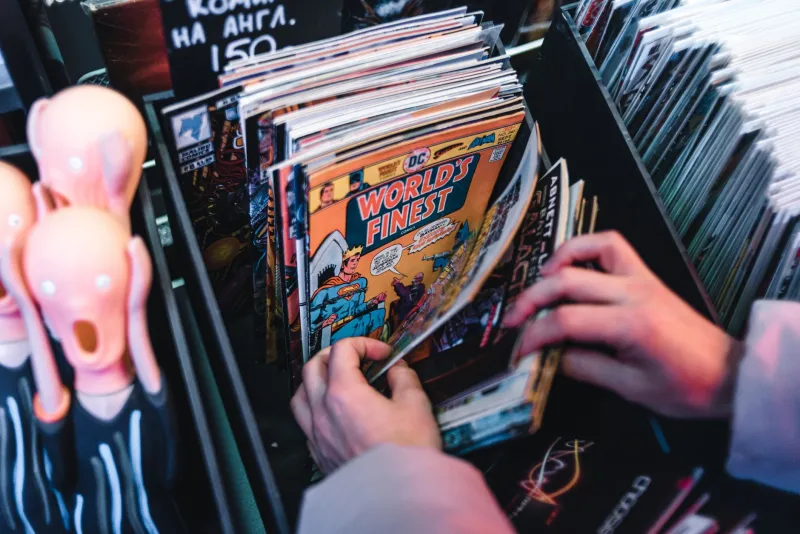
Photo by Photo by Tri Vo on Unsplash on Unsplash
Ask ten comic readers how they consume their favorite series and you'll probably get three or four who admit, a little sheepishly, that they wait. They wait for the trade. They wait for the hardcover. They wait until the whole arc is done and sitting on a shelf somewhere, complete and readable in a single sitting, before they spend a dollar on it. And then — here's the part that should terrify publishers — they don't feel bad about it at all.
The "wait for the trade" mentality used to be fringe behavior, the choice of readers who couldn't keep up with a monthly schedule or who discovered a series years after the fact. Now it's a mainstream strategy, openly discussed on forums and social media, practically evangelized by readers who've done the math and decided that the monthly single-issue experience just isn't worth what it costs anymore. Not financially. Not emotionally. Not in terms of actual storytelling satisfaction.
Something broke in the relationship between readers and monthly comics, and the industry hasn't fully reckoned with what it did to cause it.
The Decompression Era and Its Discontents
The shift started in the early 2000s, when a generation of writers influenced by film and television began applying cinematic pacing to superhero comics. The result was stories that breathed — maybe too much. Six-issue arcs where four issues of setup preceded two issues of payoff. Entire chapters that consisted primarily of characters walking and talking, meaningful glances, and half-page splash panels of reactions. Beautiful sometimes. Often frustrating.
The logic made sense from a collected edition standpoint. A six-issue arc reads beautifully as a trade paperback, with a proper three-act structure and room for emotional beats to land. The problem is that those same six issues, consumed one per month over half a year, can feel like an interminable wait for something to happen. When you're paying four or five dollars for 22 pages and the plot advances by maybe two scenes, the value proposition starts to feel insulting.
"I dropped so many series in the 2000s not because they were bad, but because I kept forgetting what had happened by the time the next issue came out," one reader wrote in a forum discussion we came across while reporting this piece. "I'd pick up the trade a year later and love it. The monthly experience was just broken."
This isn't a new observation. Readers and critics have been making it for twenty years. What's changed is that the industry has had two decades to address it and largely hasn't.
Designed for the Shelf, Not the Wednesday Pull
Here's the accusation that publishers probably don't want to engage with directly: a significant portion of modern comics are written for the collected edition first and the monthly format as an afterthought. The structure of the story, the pacing of revelations, the placement of cliffhangers — all of it optimizes for the reading experience of someone holding a complete volume, not someone who just waited 30 days for 22 pages.
This isn't purely a creative failure. It's also an economic one. Publishers know that trades sell consistently over time in bookstores and through online retailers, reaching readers who would never set foot in a comic shop. The direct market — the network of specialty shops that built the industry — represents a shrinking share of overall revenue for most major publishers. So the incentive to optimize for that audience has declined accordingly.
The result is a feedback loop that's not great for anyone. Monthly readers feel like they're paying for a preview. Shops that depend on those monthly sales see declining pull list numbers. Publishers respond by pumping out more variants and gimmick covers to juice single-issue revenue, which alienates readers further and deepens the sense that the monthly format is more about extraction than storytelling.
The Podcast and Streaming Parallel
It's worth noting that comics aren't the only medium wrestling with this tension. The music industry spent years fighting the shift from album sales to streaming singles and playlists. Television went through a version of this with the binge-watching model, where entire seasons dropped at once and the weekly appointment-viewing ritual became optional.
In both cases, the industry initially resisted, then slowly adapted, then found new models that worked for the changed landscape. Comics are somewhere in the middle of that process, still clinging to a monthly format that made sense when it was the only delivery system available but hasn't been that for a long time.
Digital comics have theoretically offered a solution — instant access, lower price points, no physical storage issues — but the industry's relationship with digital has been complicated by pricing decisions that often make digital single issues cost the same as print, eliminating one of the obvious advantages.
What Monthly Comics Actually Do Well (When They Try)
Here's the thing that gets lost in the "wait for the trade" discourse: monthly comics can do things that collected editions genuinely cannot. The best single issues are designed to work as complete experiences — a beginning, middle, and end within 22 pages, with a hook that makes you desperate for next month. The serialized cliffhanger, when it's earned and not just manufactured, creates a specific kind of anticipation that binge consumption simply doesn't replicate.
There are writers working right now who clearly understand this. Issues that function as short stories within a larger narrative. Issues with formal experiments — different narrators, unconventional layouts, silent sequences — that would disappear into the flow of a collected read but hit hard as a standalone monthly experience. When a single issue lands like that, the format justifies itself completely.
The problem is that these issues feel increasingly rare, like exceptions that prove the rule rather than a consistent standard.
Can the Monthly Format Save Itself?
Some publishers are experimenting with responses to this problem. Shorter arcs. More done-in-one issues. Pricing structures that reward monthly readers with content not included in the eventual trade. Whether any of these approaches will meaningfully reverse the "wait for the trade" trend is genuinely unclear.
What seems certain is that the industry can't just keep doing what it's been doing and expect different results. The readers who are waiting for the trade aren't going away. They're comfortable, they've made their peace with delayed gratification, and frankly, they're often getting a better reading experience for their patience.
Monthly comics need to give readers a reason to show up every Wednesday that the collected edition can't replicate. Right now, too many series aren't even trying to make that case. And readers, being rational people, are drawing the obvious conclusion.