No Capes for You: How Comic Fandom's Gatekeeping Culture Is Scaring Off the Next Generation of Readers
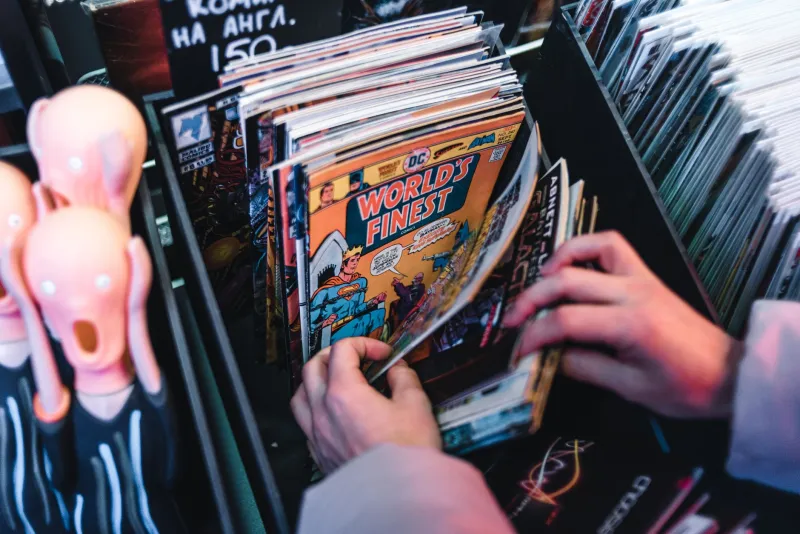
Imagine walking into a record store, picking up an album you've never heard of, and having the guy behind the counter snort and say, "You don't even know the B-side discography. Why are you even touching that?" Sounds ridiculous, right? Yet versions of that scene play out in comic shops, Reddit threads, and Discord servers every single day — and it's quietly doing damage that no crossover event or Hollywood blockbuster can undo.
Comic books are, by almost any measure, more culturally visible than they've ever been. Marvel and DC dominate the multiplex. Graphic novels sit on the shelves at Target. Manga has exploded into mainstream American culture in a way that would've seemed impossible fifteen years ago. And yet, the dedicated monthly comic-reading community keeps shrinking. Publishers struggle to convert casual fans into actual buyers. New readers show up, get burned, and leave. The medium has a front door problem — and a significant chunk of that problem lives inside the fandom itself.
"I Just Wanted to Read Spider-Man"
Take Destiny, a 24-year-old from Atlanta who became a huge Marvel fan after the Avengers films and decided, around 2021, that she wanted to start reading the actual comics. She went to a local shop, picked up a recent issue of Amazing Spider-Man, and asked the person working there where she should start.
"He kind of laughed," she says. "Not in a mean way, exactly, but in this way that made me feel dumb for asking. He started talking about continuity going back to like the '60s, told me I'd be lost without reading at least 200 back issues, and handed me this massive reading order list he'd printed out. I walked out without buying anything and didn't go back for six months."
Destiny's experience isn't unusual. Across fan forums and social media, new readers report variations of the same story: enthusiasm met with condescension, simple questions answered with overwhelming complexity, and a general atmosphere that communicates, loudly and clearly, that you haven't earned your place here yet.
Marco, a 19-year-old college student from Chicago who got into comics through manga, tried joining several superhero comic subreddits and found the culture similarly unwelcoming. "Every time I asked a question, someone would respond with this massive wall of text about why my question was wrong," he says. "Like, I just wanted to know if I needed to read Civil War before Secret Invasion. I didn't need a dissertation."
The Lore Trap
Part of what makes this problem so tricky is that it's not entirely manufactured out of malice. Decades of serialized storytelling genuinely have produced a complicated web of continuity, and longtime fans have invested real time and emotional energy into mastering it. There's a natural human impulse to protect that investment — to signal that the knowledge you've accumulated means something.
But that impulse, however understandable, creates what you might call the Lore Trap: a situation where the depth that makes comics so rewarding for dedicated readers becomes an active weapon against anyone trying to get started. When a fan responds to "Where do I start with Batman?" with a 47-step reading order beginning in 1939, they're not being helpful. They're performing expertise at the expense of accessibility.
Industry observers have been flagging this dynamic for years. Comic shops that prioritize community-building over gatekeeping consistently report better long-term customer retention. The stores that treat every new face as a potential lifelong reader — rather than an interloper who hasn't paid their dues — tend to actually grow their customer base.
The Online Dimension Makes It Worse
If the in-store experience can be intimidating, the online comic community can be genuinely brutal. Platforms like Reddit, Twitter/X, and various Discord servers have become the primary entry points for a lot of potential new readers — and the culture on many of those platforms actively punishes curiosity.
The anonymity of online spaces amplifies the worst gatekeeping instincts. Questions get downvoted. Opinions get mocked. The implicit message is that there's a correct way to be a comic fan, and if you don't already know what it is, you probably don't belong.
This is particularly damaging for readers who come to comics from adjacent fandoms — people who loved the MCU, or got hooked on manga, or discovered graphic novels through YA and want to explore further. These are exactly the readers the industry needs. They already have proof of concept that they'll invest time and money in sequential art storytelling. They just need an on-ramp, not a bouncer.
What Actually Works
The good news is that solutions exist, and some corners of the community are already putting them into practice.
Lead with standalone stories. Books like Batman: Year One, Ms. Marvel (the Kamala Khan run), Saga, Paper Girls, and Black Panther: A Nation Under Our Feet are genuinely great entry points precisely because they don't require a PhD in continuity to enjoy. Fans who actually want to grow the community lead with these recommendations, not with 12-part crossover events.
Embrace the "good enough" starting point. The perfect reading order is the enemy of actually reading comics. Telling a new reader to start with whatever issue is on the shelf right now — and trusting them to fill in gaps as they go — is almost always better advice than handing them an overwhelming prerequisite list.
Retailers can set the tone. Shops that train staff to ask "What do you already love?" before making recommendations, and that stock accessible entry-point titles prominently near the door, consistently outperform stores that cater exclusively to the hardcore collector crowd.
Online communities can self-police. Subreddits and Discord servers that actively moderate gatekeeping behavior and explicitly welcome beginner questions create healthier, faster-growing communities. It takes deliberate effort from moderators and regular members, but the results are measurable.
The Stakes Are Real
This isn't just about being nice, though being nice is also good. Comic books as a monthly publishing format are genuinely struggling. The direct market has been contracting for years. Publishers are desperate for new readers. Every potential fan who gets chased off by a condescending comment or an overwhelming reading list is a lost customer — and, more importantly, a lost person who might have genuinely loved this medium.
The fans who built these communities didn't do it to keep people out. Most of them fell in love with comics because someone handed them the right book at the right time and said, "You're going to love this." The gatekeeping instinct, whatever its psychological roots, is a betrayal of that origin story.
Destiny, by the way, eventually found her way into comics — through a different shop, with a staff member who just handed her Spider-Man: Blue and said it was a great place to start. She's now a regular customer and an enthusiastic evangelist for the medium.
"I just needed someone to treat me like I was welcome," she says. "That's really all it took."
That's not a high bar. It's time more of us cleared it.